Not every language has a word for everything. Sometimes it takes a phrase or even a whole sentence in English to express something that can be conveyed with just one word in another language, and vice versa.
For instance, a word like ‘sibling’ in English (a gender-neutral term for a brother or sister) doesn’t have a direct counterpart in everyday Russian, French, Spanish or Italian. Translating the question ‘do you have any siblings?’ could be approached by translating the slightly longer ‘do you have any brothers or sisters?’. However, it would be impossible to translate ‘I have one sibling’ in a gender-neutral way without making significant structural or semantic changes. Neither ‘I have one brother or sister’ nor ‘my parents have another child’ are elegant or natural-sounding solutions.
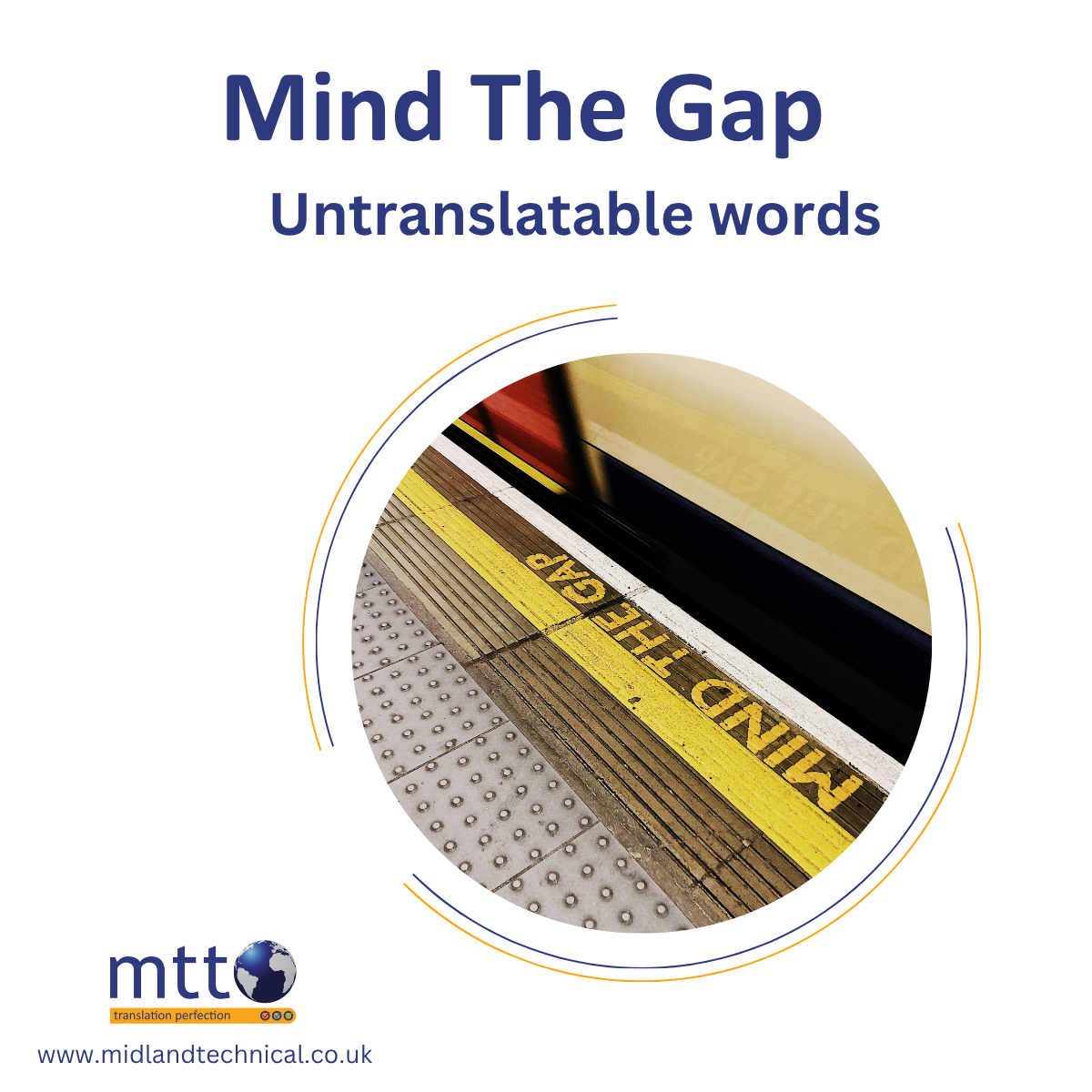
These absences are known as lacunas or lexical gaps; literally, gaps in the ‘lexis’ or vocabulary. Far from being flaws, lexical gaps highlight the unique ways different languages and cultures view and describe the world around them.
In translation, however, lexical gaps provide the challenge of trying to translate a single word that can’t be directly translated. And while replacing one word with six might not matter in long-form text, it can certainly cause problems when translating headings, software strings, headlines and campaign taglines.
We’ve included some of our favourite words which can’t be translated directly into English:
Hiraeth (Welsh)
Élan (French)
Tsundoku (Japanese)
Zeitgeist (German)
Hygge (Danish)
Schadenfreude (German)
As the last examples show, sometimes ‘untranslatable’ words are so useful they’ve been adopted into English!
For your next translation project, contact our friendly team to see how we can help you.
+44 1562 748 778