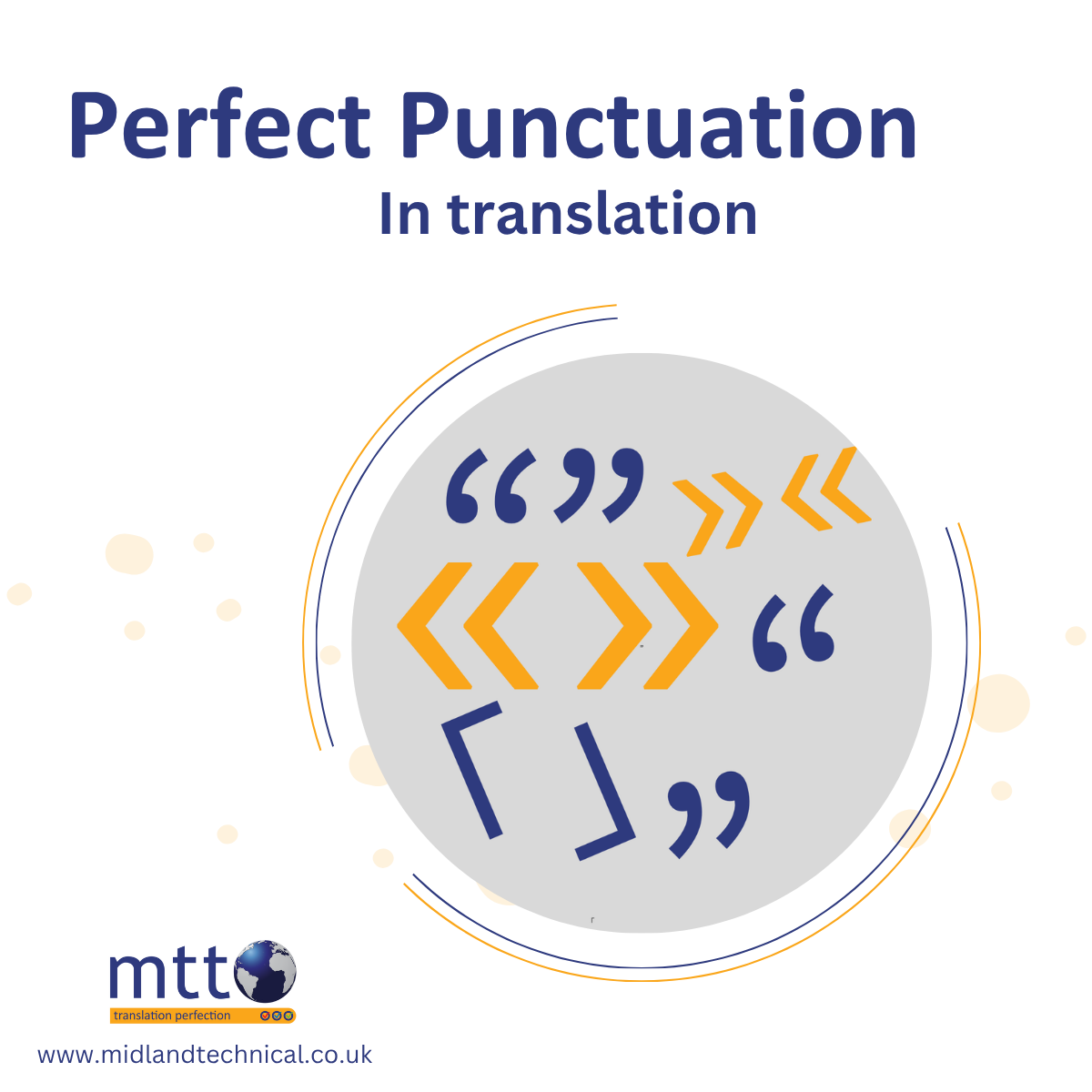

Using the wrong punctuation can undermine the credibility of even the most accurate translation. In this Perfect Punctuation post, we’re looking at quotation marks (also known as speech marks) in translation. Let’s go on a short tour of how quotation marks can vary from language to language.
In English, the most common form of quotation marks are double quotes: “xxxx xxxx”
French and Spanish often use guillemets (angled quotation marks): « xxxx xxxx »
German typography places the opening mark at the bottom and the closing mark at the top: „xxxx xxxx“ (But this doesn’t apply to Swiss German which usually uses guillemets!)
Polish uses a similar inverted style: „xxxx xxxx”
Danish may use several styles depending on context. Common forms include: “xxxx xxxx” or »xxxx xxxx«
Many East Asian languages use distinctive corner-style brackets. Japanese: 「xxxx xxxx」
Like all punctuation, quotation marks may be small, but they can make a big difference.
For your next perfectly punctuated translation project, contact our friendly team to see how we can help you.
+44 1562 748 778