
Perfect punctuation: Why numbers don’t translate themselves
We’ve said it before and we’ll say it again; a good translation needs good punctuation. And this applies to numbers just as much as it applies to words.
For an English-speaking audience, the standard number format is a full stop (period) to denote a decimal point and a comma as a thousand separator. That means we can tell at a glance that 1.234 equals one point two three four and 1,234 equals one thousand two hundred and thirty four.
However, in many languages the complete opposite is true and in everyday usage commas are used for decimals and full stops (periods) are used for thousands. Another variation is the use of non-breaking spaces as thousand separators (which in our example would be 1 234) and which is the international usage recommended by ISO.
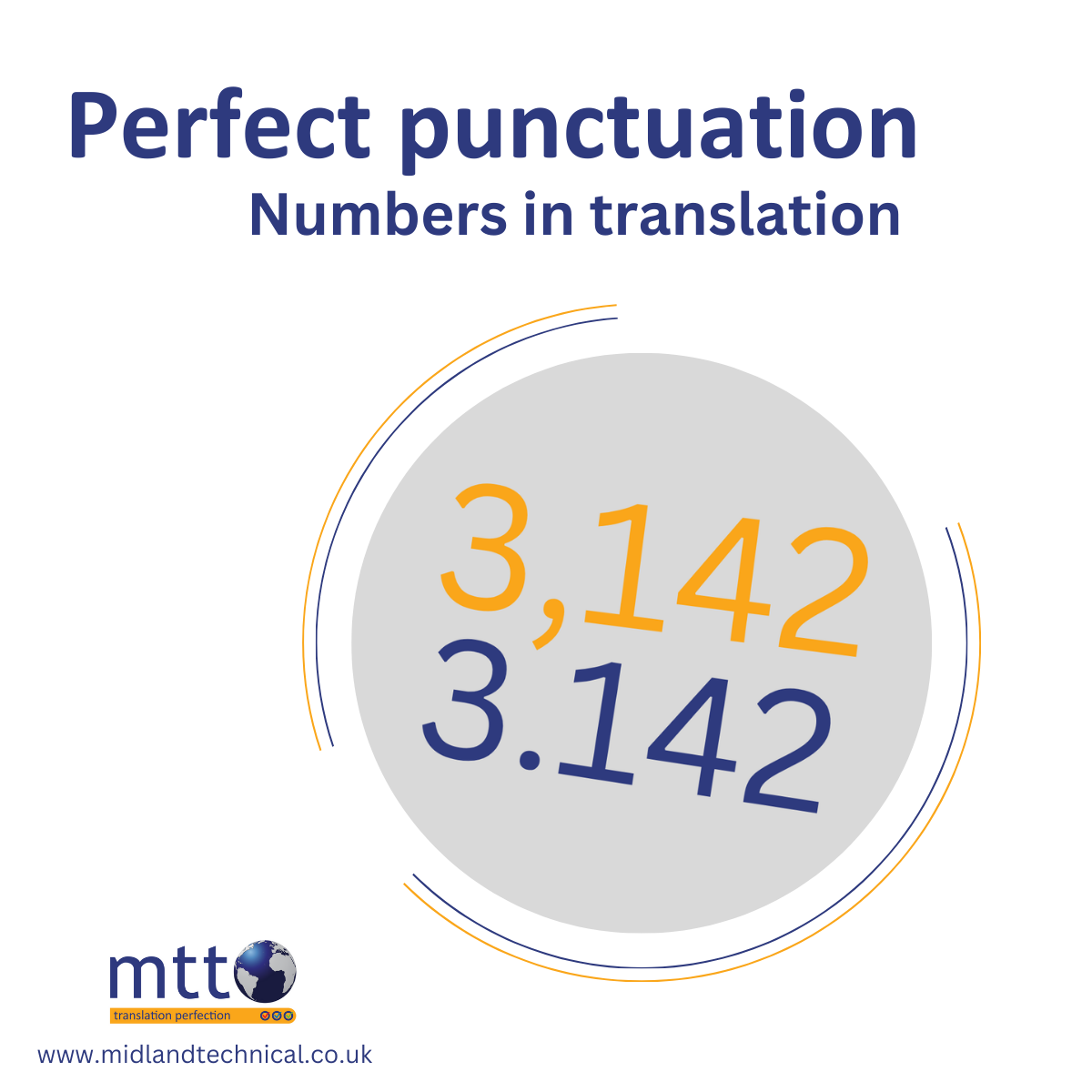
All in all, there is huge potential for confusion. For instance, which of the numbers below is a rendering of pi (π) to three decimal places and which is the price of a very luxurious hotel suite all depends on the number format you are habituated to and your reading of the punctuation.
3,142
3.142
Small punctuation mark, big difference in meaning! It’s a very important reminder that numbers need translating too.
For your next translation project, contact our friendly team to see how we can help you.
+44 1562 748 778