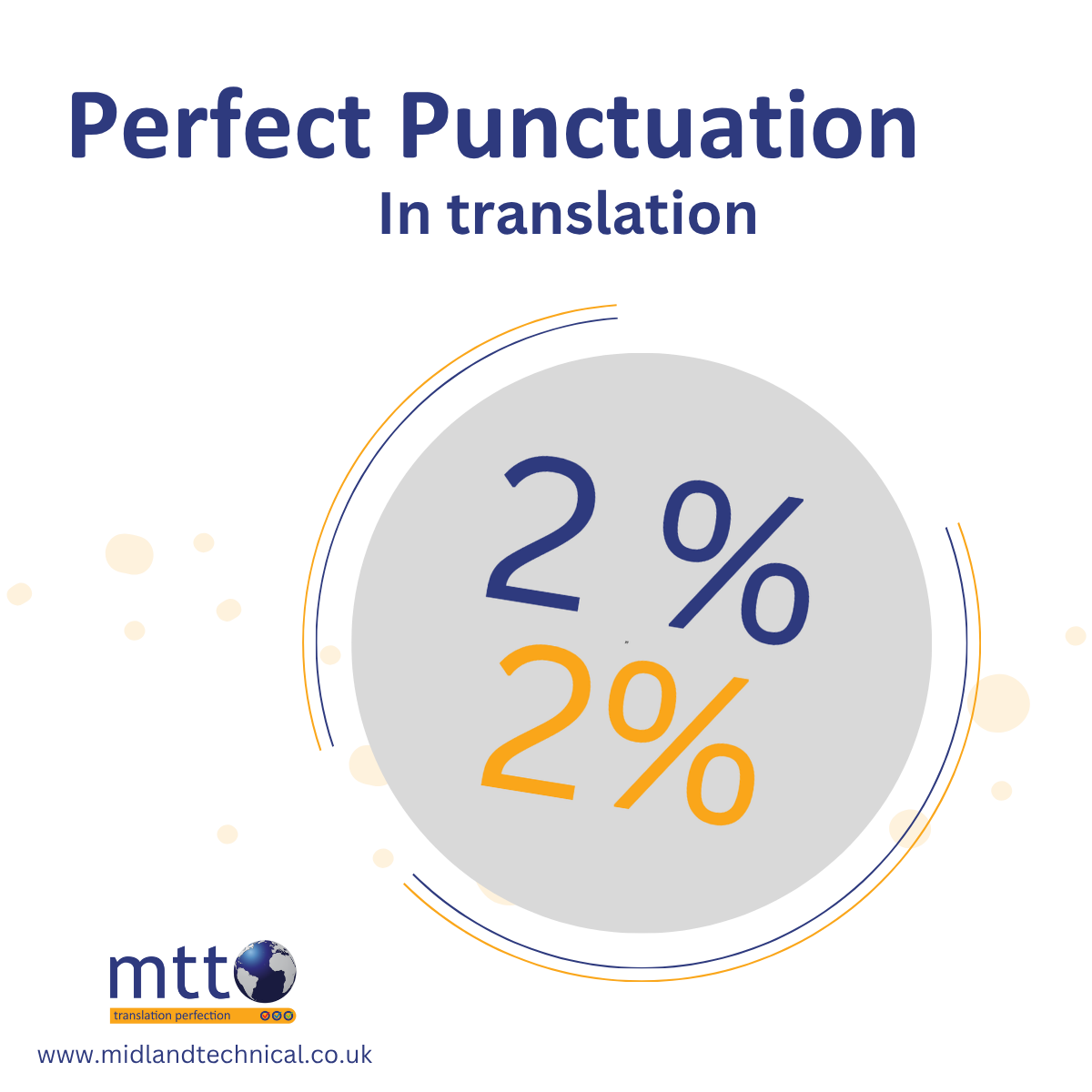

Perfect punctuation - spaces
In previous posts we’ve looked at question marks, punctuation in numbers (decimals and thousand dividers) and quotation marks. Here we’re considering something equally important, but a lot less visible – the space.
A space is not a punctuation mark, nevertheless it acts like one, helping to organize meaning and aid readability. The use of spaces adjacent to punctuation marks is an important style convention in some languages. When overlooked or misapplied, the spaces can be a clear giveaway that a translation is not as polished as it could be.
In French, unlike English, a space is required before the following punctuation marks: colons, semi-colons, exclamation marks, question marks, the percent symbol, and currency symbols. In the French example text below, there is a space before both the colon and the percent symbol.
Special offer: 30% discount
Offre spéciale : 30 % de réduction
But not all spaces are the same. The spaces used before punctuation marks are ‘non-breaking’ spaces. Although standard spaces and non-breaking spaces may appear equally invisible, the latter are special characters which prevent the punctuation mark from wrapping onto the following line. They are used to keep related elements (like the 30 and % in the example above) kept together neatly. In many languages, including French and German, non-breaking spaces are also inserted in measurements to separate the number from the unit, for instance: 5 mm or 12 kg. In English it would be unremarkable to omit the space, however many English style guides direct their use.
Although not a punctuation mark, the correct use of spaces in translated texts is an integral part of what makes a ‘perfectly punctuated’ text feel ‘native’.
For your next translation project, contact our friendly team to see how we can help you.
+44 1562 748 778